


Gainswave vs P-Shot for erectile dysfunction compares an external acoustic-wave treatment with an injection made from the patient’s platelet-rich plasma. The procedures differ in their proposed mechanisms, candidate considerations, treatment schedules, and recovery experience. Neither option is automatically appropriate based on ED symptoms alone, so Men’s Health Medical Care evaluates the likely cause before comparing them.
The Main Difference Between Gainswave and the P-Shot
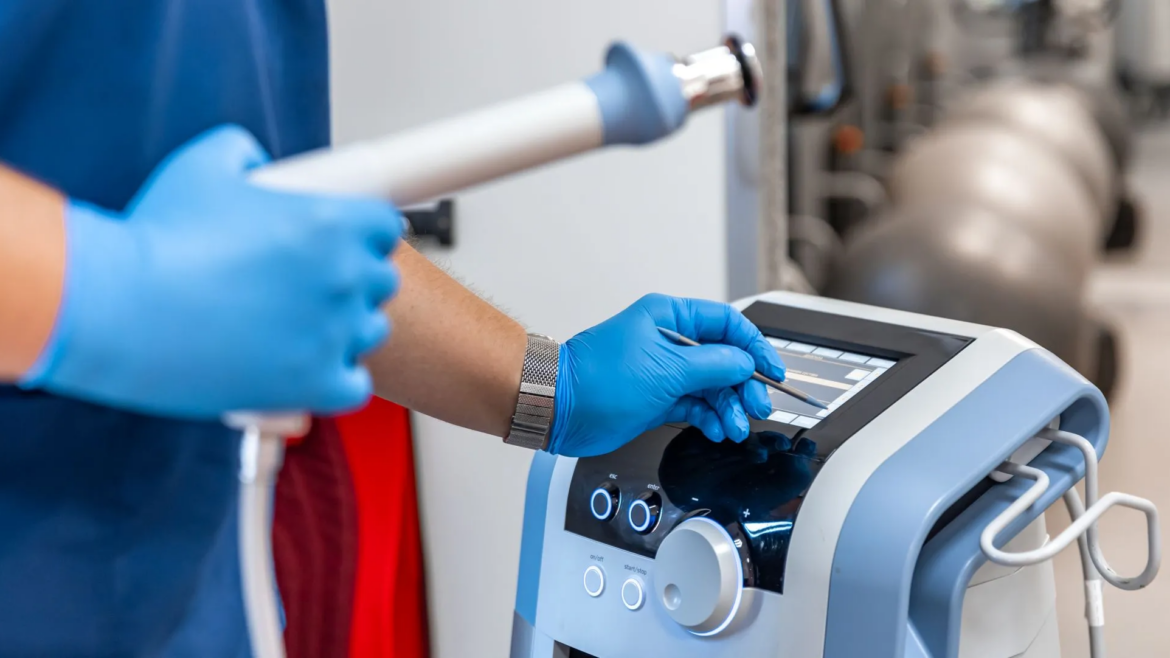
GAINSWave® applies acoustic waves externally to penile tissue. The treatment is intended to support local circulation and is most closely aligned with erectile dysfunction involving reduced blood flow.
The P-Shot involves drawing blood, separating platelet-rich plasma, and injecting the prepared material into specific areas of the penis. Platelets release signaling proteins involved in the body’s normal tissue-repair processes. This provides the proposed basis for using PRP, but it does not establish that the procedure regenerates penile tissue or reliably improves erectile function.
This difference does not make either procedure universally better. GAINSWave is more directly aligned with suspected vasculogenic ED, while the P-Shot may be discussed by men interested in platelet-rich plasma treatment. Strong head-to-head clinical trials have not established that either option produces superior results overall.
The American Urological Association considers low-intensity extracorporeal shockwave therapy and platelet-rich plasma therapy investigational for ED. Investigational status does not prove that an individual patient cannot improve. It means the available evidence is not strong or consistent enough to support either procedure as routine ED treatment for every patient.
How Each Treatment Supports Erectile Function
Both procedures are intended to support erectile function without requiring a pill immediately before sexual activity. However, they use different processes and should not be treated as interchangeable.
Neither procedure directly corrects every cause of ED. Hormone deficiency, nerve injury, medication effects, cardiovascular disease, diabetes, performance anxiety, and relationship factors can influence erections independently of penile blood flow or the proposed effects of PRP.
Gainswave and Penile Blood Flow
GAINSWave® delivers acoustic waves through the skin without penile injections or surgery. It is intended to stimulate a local response and support penile blood flow, making it more closely aligned with ED that appears vascular.
A gradual reduction in erectile rigidity, fewer spontaneous erections, diabetes, smoking, hypertension, or abnormal cholesterol can support further investigation of a vascular cause. These findings are not specific enough to confirm vasculogenic ED independently because hormonal, neurological, and medication-related conditions can create similar symptoms.
Evaluation can include medical and sexual history, blood-pressure measurement, cardiovascular risk assessment, physical examination, medication review, and laboratory testing. Penile Doppler ultrasound may be considered when the cause remains uncertain or when objective information about penile blood flow would materially change the treatment decision.
Men with uncontrolled cardiovascular or metabolic conditions may need those issues addressed before an elective ED procedure. The purpose is not simply to improve treatment response. ED can be associated with systemic vascular disease, and cardiovascular health may affect whether sexual activity itself is safe.
Not every acoustic-wave device or protocol is identical. Device type, energy delivery, number of pulses, treatment locations, and session schedule can vary. Evidence involving one form of low-intensity shockwave therapy should not automatically be applied to every commercial acoustic-wave treatment. Patients should confirm which technology and protocol will be used and what evidence supports the claims made for that specific approach.
P-Shot and Tissue Support
The P-Shot uses platelet-rich plasma prepared from the patient’s blood. After a blood draw and processing, the concentrated plasma is injected into penile tissue.
PRP preparation can vary by platelet concentration, processing method, activation technique, injection location, and the amount administered. These differences make it difficult to assume that every P-Shot protocol is equivalent or that results from one study apply to every procedure.
The P-Shot is sometimes discussed for mild to moderate erectile concerns, changes in sensitivity, or interest in tissue-focused treatment. However, reliable improvements in penile sensation, tissue quality, erectile function, or penile size have not been established. There is also no validated symptom threshold or clinical profile that reliably predicts who will benefit.
Using the patient’s blood does not make the procedure risk-free. Injection discomfort, bruising, swelling, bleeding, and infection remain possible. Anticoagulant use, platelet abnormalities, bleeding disorders, and active infection require review before treatment.
Which ED Concerns Each Option Fits Best
The comparison below shows how each procedure aligns with common decision factors. It does not replace an evaluation or guarantee that a particular concern will respond.
| ED concern or decision factor | GAINSWave | P-Shot |
| Suspected blood flow-related ED | More directly aligned with a circulation-focused approach | Not established as superior for vascular ED |
| Preference to avoid needles | Applied externally without a penile injection | Requires a blood draw and penile injections |
| Interest in platelet-rich plasma | Does not use PRP | Uses PRP prepared from the patient’s blood |
| Reduced sensitivity | Not a confirmed treatment for sensory loss | Sometimes discussed, but reliable sensory improvement is not established |
| Mild to moderate erectile difficulty | May be considered when vascular findings are present | Sometimes considered, although validated candidate criteria are lacking |
| Significant nerve injury or post-surgical ED | Response may be limited when nerve damage is the primary cause | Evidence is insufficient to predict reliable benefit |
| Confirmed testosterone deficiency | Does not correct the hormone deficiency | Does not correct the hormone deficiency |
| Primarily situational or psychological ED | Does not directly address performance anxiety or relationship factors | Does not directly address performance anxiety or relationship factors |
| ED caused by another medication | Does not remove the medication-related cause | Does not remove the medication-related cause |
| Anticoagulant use or bleeding concerns | Avoids injection-related bleeding, but bruising risk and overall suitability still require review | Requires additional assessment because the procedure involves blood collection and injections |
| Desire for an immediate erection | Not an on-demand treatment | Not an on-demand treatment |
| Expectation of a guaranteed cure | Not supported | Not supported |
Poor results from ED pills do not automatically make either procedure the next appropriate choice. Timing, meals, insufficient sexual stimulation, an unsuitable dose, drug interactions, and inconsistent use should be reviewed before medication is classified as unsuccessful.
Neither GAINSWave nor the P-Shot is an established default next-line treatment after an inadequate pill response. Severe vascular disease, neurological injury, hormone deficiency, or another underlying condition may point toward a different treatment or referral.
Treatment Experience, Recovery, and Timing Differences
GAINSWave is performed through externally applied acoustic pulses and does not normally require anesthesia. A treatment plan commonly involves a series of six to twelve appointments, with individual sessions lasting approximately 15 to 20 minutes. The recommended schedule can vary according to the protocol and clinical findings.
The P-Shot begins with a blood draw and preparation of platelet-rich plasma. A local anesthetic is generally used before the penile injections. The procedure is commonly completed during one appointment lasting approximately 30 minutes, followed by reassessment. Repeat treatment is not standardized and should depend on the response rather than an automatic schedule.
Temporary tenderness, tingling, redness, or minor bruising can occur after GAINSWave. The P-Shot can cause soreness, swelling, bruising, or sensitivity around the injection sites. Most patients can resume routine non-strenuous activities promptly, but exercise and sexual-activity instructions depend on the procedure, injection response, and individual risk factors. Same-day sexual activity should not be assumed without following the instructions provided after treatment.
Neither procedure creates an erection during the appointment or functions like an on-demand ED medication. GAINSWave response should generally be assessed after the planned series rather than after one session. P-Shot response should be reviewed at the scheduled follow-up before another injection is considered.
Assessment can compare erection rigidity, ability to maintain an erection, spontaneous erections, reliance on other ED treatments, and a standardized erectile-function score recorded before treatment. Continuing a procedure without a defined baseline or measurable response makes it difficult to determine whether it is providing meaningful benefit.
Can Gainswave and the P-Shot Be Combined?
GAINSWave and the P-Shot may be considered in the same overall treatment plan, but evidence supporting a specific combined protocol is limited. There is no established order, interval, or evidence-based rule showing that same-day treatment produces better results.
The suspected primary cause should determine which procedure, if either, is considered first. A circulation-focused treatment is more logically connected to documented vascular findings. Interest in PRP requires a separate discussion of its proposed tissue-support role, injection risks, and weaker candidate-selection criteria.
A staged approach allows recovery from the first procedure and provides time to measure its effect before adding another intervention. This makes it easier to identify which treatment produced a response and whether the second procedure is still justified. Staging should not be interpreted as proof that combined treatment produces superior outcomes.
When combination treatment is considered, erectile rigidity, ability to maintain an erection, spontaneous erections, sensitivity, and reliance on other ED treatments should be recorded before the first procedure. The second treatment should not be added solely because improvement was not immediate.
Using both procedures should not replace investigation of low testosterone, cardiovascular risk, medication-related ED, nerve injury, or psychological factors. Two treatments directed at penile tissue will not necessarily correct a cause located elsewhere.
How a Men’s Health Center Chooses Between Gainswave and P-Shot
A men’s health evaluation should first determine whether the symptoms are most consistent with vascular ED, hormone deficiency, nerve-related dysfunction, medication effects, psychological factors, or a combination. The decision between GAINSWave and the P-Shot comes after that assessment.
At Men’s Health Medical Care, the comparison considers symptom progression, spontaneous erections, previous treatment response, medical history, current medications, cardiovascular risks, bleeding risk, and tolerance for injections. Blood-pressure findings, morning testosterone testing, metabolic risk factors, and penile blood-flow testing when indicated can further clarify whether either procedure matches the suspected cause.
When neither option fits the diagnosis, the next step may involve addressing an underlying medical condition or discussing another established ED treatment. Referral to a primary-care physician, cardiologist, endocrinologist, or urologist may be appropriate when cardiovascular disease, hormone dysfunction, significant nerve injury, or a more advanced treatment need is identified.
Follow-up should compare the patient’s results with the baseline measures established before treatment. Lack of meaningful improvement, new adverse effects, or a change in the suspected cause should trigger reassessment rather than automatic continuation or combination treatment.